
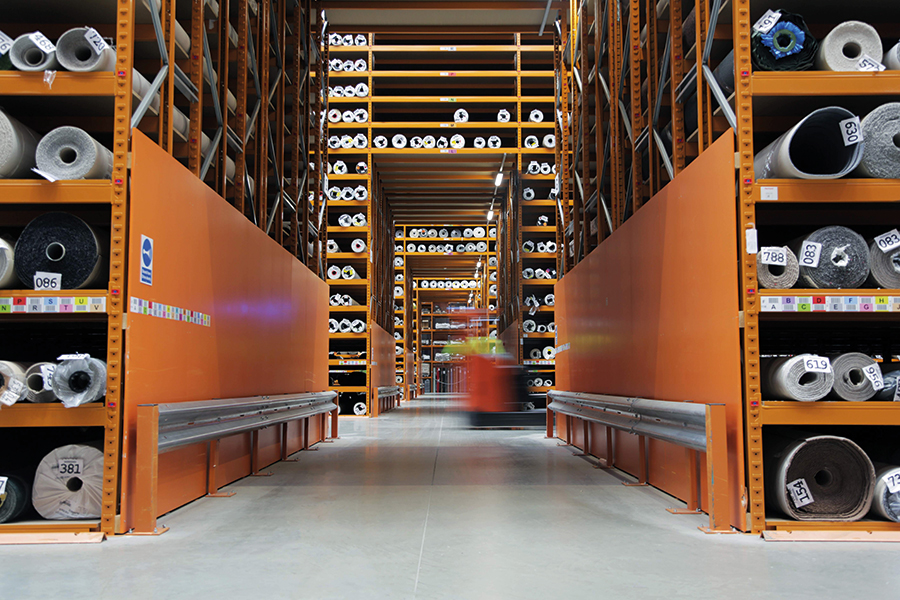

In the below article, Headlam’s Sales Director John Clark discusses the effects of the recent conflict in the Middle East on the flooring market. Although a peace deal has now been announced between the US and Iran, the war’s effects on the global economy will be felt for months to come as the supply of oil and gas from the Middle East is gradually restabilised.
In an increasingly interconnected market, global events have a way of echoing right through to the shop floor. In recent months, rising fuel, energy and transport costs have become a familiar challenge for us all and the flooring sector is no exception.
As the UK’s leading flooring distributor, Headlam is seeing first-hand how the ongoing conflict in the Middle East is influencing supply chains, pricing and availability. In a period of significant uncertainty, we believe retailers need more than just products; they need clear, practical guidance and transparent communication to help them make sense of changing market dynamics, plan ahead and operate their businesses with confidence.
Why the Middle East matters to flooring
The Middle East plays a critical role in supplying the oil, gas and petrochemical-based raw materials used in many flooring products. It is also central to global shipping and logistics routes. This means even where flooring is manufactured in Europe or Asia, the industry remains closely connected to the region through energy and raw material supply.
Disruption in the Middle East feeds directly into higher manufacturing and transport costs, longer lead times and, in some cases, reduced availability.
Why carpet is under the greatest pressure
Carpet is currently the category under the greatest strain. Mass-market carpet is largely made from polypropylene, polyester or wool. Polypropylene and polyester are both closely linked to crude oil and natural gas, depending on a complex international supply chain. Much of the yarn used in carpet manufacturing is produced in Turkey, a region whose raw material supply is tied closely to Middle Eastern production.
When disruption affects those flows, it has an immediate effect. Retailers are seeing more frequent price adjustments in polypropylene and polyester ranges, alongside more variable availability.
The effect on other flooring categories
While carpet is the clearest example, other categories are also likely to experience similar pressures. While availability remains relatively stable in these areas, the underlying cost of supply remains uncertain.
What retailers should expect
For retailers, this environment means three things: continued price pressure, potentially longer lead times and an increase in customer questions. This makes the role of the retailer as a trusted adviser more important than ever. Customers value clarity; they want to understand why prices are shifting and what alternatives might suit their budget and timeline.
Retailers can support customers by communicating early around timing, managing lead times with a degree of contingency, and recommending suitable substitutes where a first-choice product is delayed.
How Headlam is responding
Our focus is on supporting our partners through clear communication and practical action. We are providing regular updates, including pricing communications where needed, so retailers have the information they need to plan with confidence.
We are also leveraging our position as a priority customer for major suppliers in Europe and Turkey to maintain visibility of supply. By placing significant forward orders before the recent escalation, we have ensured that critical stock is now arriving.
This is an industry wide challenge within an ever-changing landscape. To navigate it successfully, the focus must remain on agility, transparency and open communication across the entire supply chain. By staying informed and proactive, retailers can continue to work alongside distributors and manufacturers to provide the expert guidance their customers have come to rely on.
www.headlam.com