


One of the UK’s most storied carpet manufacturers, Brintons was founded in Kidderminster in 1783. Although the carpet industry has changed immeasurably since then, the company remains headquartered in the ancestral home of UK carpet, conducting its now-global operations with a focus on heritage and tradition while simultaneously looking to the future.
This month we spoke with Jodie Hatton, Design Manager for Europe at Brintons, discussing the company’s long history and how that has informed its approach to today’s challenges.
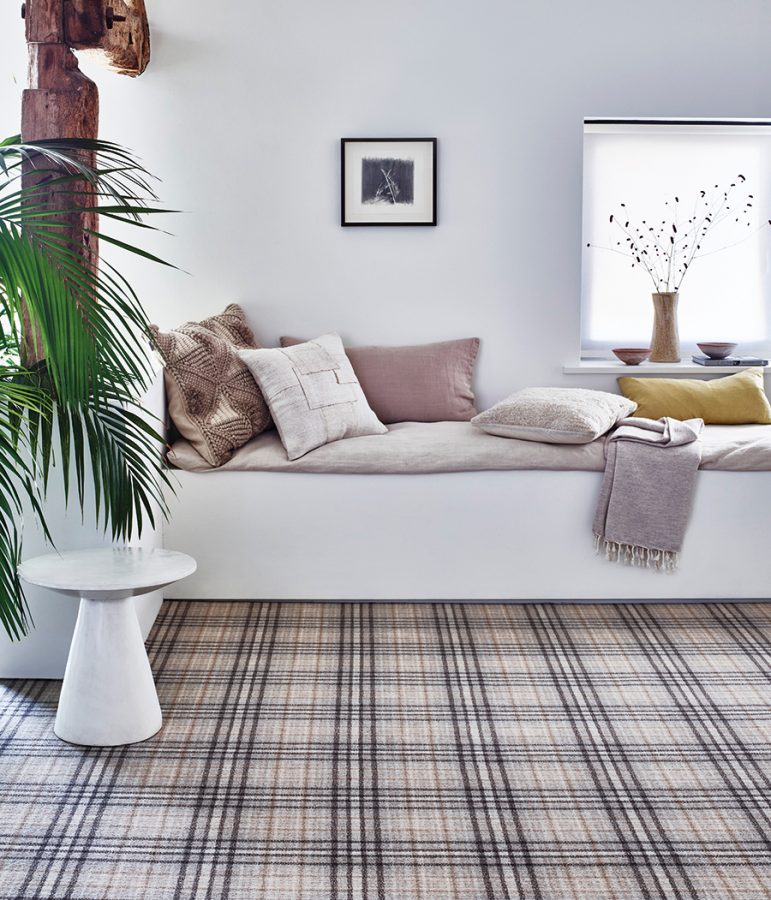
A heritage company
Jodie explains that Brintons was founded in the late 18th century by the Brintons family in Kidderminster, a town that was “really created around carpet manufacturing”. To this day, the company’s head office is located on an offshoot road called Fine Point Way, and the Brintons family’s influence can be seen throughout the town in the form of parks and pubs. A few highlights from the company’s early history include patenting the Axminster loom in 1890 and pioneering the 80/20 wool nylon blend.
Brintons operates in both the residential and commercial sectors with commercial being the larger segment of the business. Retail markets include UK, Poland, parts of the US and Australia whilst the commercial side of the business is Global. Brintons is available both through a large range of independent retailers as well as multiples like Tapi.
Jodie’s own journey with Brintons began just over a decade ago, working as as a designer with commercial clients in London. Around five years into her tenure, she was promoted to Residential Design Manager and was tasked with overhauling the company’s residential ranges, before eventually being promoted once more to Design Manager for Europe. In her current role, Jodie oversees design for the company across both commercial and retail, working with a team of 8 designers.

Meeting the moment
In 2026, challenging economic conditions and strong competition from other sectors of the industry mean that carpet manufacturers need to carefully monitor consumer behaviours to stay ahead of the curve.
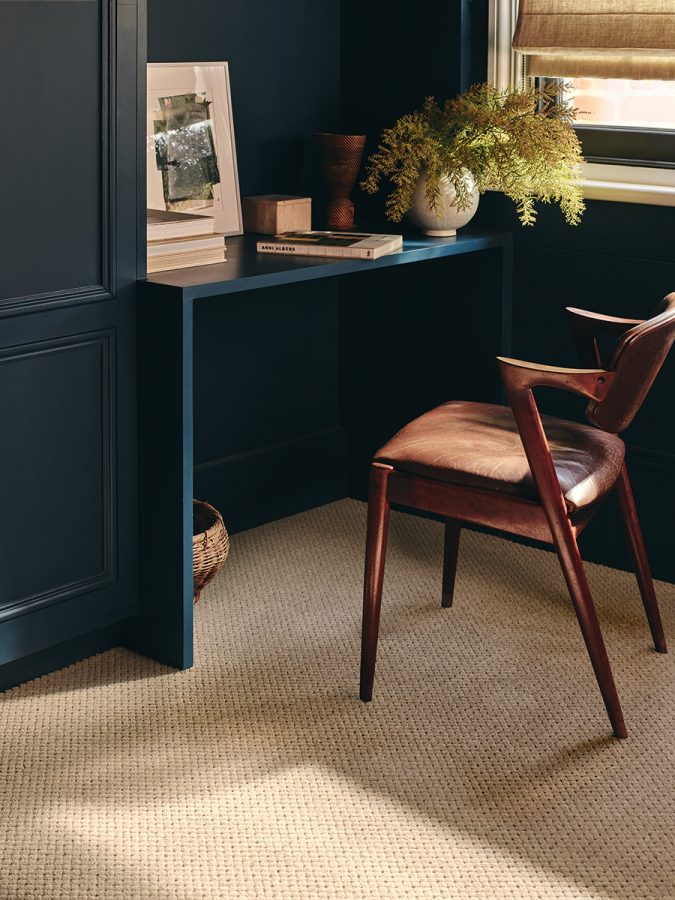
With these factors in mind, Brintons has welcomed the growing focus on ‘wellness’ among consumers, a concept which centres comfort and warmth. In fact, for Jodie, the idea goes beyond a fashion or a fad. “I’d hesitate to call it as a trend because I see it more of like a societal movement. I think people are beginning to take much more interest and time in looking after their health and comfort and well-being. And design follows what’s happening in society, so interiors have naturally been influenced by that. And I think that’s why we’re seeing a growing interest in natural materials like the 100% wool carpet.”
Importantly, Brintons sources the majority of its wool from here in Britain, and is proud to support both the Campaign for Wool and the official British Wool organisation. Customers will see the British Wool Crook mark on the back of most of Brintons’ ranges, a reassuring symbol of both quality and responsibility.
Even where customers are set on hard flooring, she says, Brintons has a strong portfolio of rugs, introduced around a decade ago, which aim to supplement those spaces with a sense of homely comfort. Our rug offer is continually expanding and a large number of our retailers now have rugs in-store.
Staying in the game
In addition to keeping a close eye on customer behaviour and design trends, another area Brintons strives to be forward-thinking in is sustainability. As Jodie explains, sustainable manufacturing isn’t simply a matter of anticipating more conscientious customers, it’s increasingly table stakes to be a viable player in the global market at all. “My perspective is that its importance is changing,” Jodie says. “Sustainability is starting to be implemented on Government and legislation levels. It’s now less of a movement or a trend and is simply non-negotiable. Every company has to have a policy and a sustainable offer – otherwise you’re just not in the game.”
The Purely Natural range is Brintons’ answer to this challenge, a fully bio-based carpet made from undyed wool with a cotton, jute and natural rubber latex backing. According to the company, the range is renewable, biodegradable and completely plastic-free, while the use of undyed wool reduces the amount of water used during the manufacturing process.
Beyond its product offering, Brintons is also a member of the UK Sustainable Flooring Association (who The Stocklists interviewed back in August of last year), which Jodie describes as a “direct link between carpet manufacturers and the Government”. For Brintons in particular, having a voice in that conversation is vitally important as wool flooring is a relatively small percentage of the overall floorcoverings industry. “You do find there’s a big synthetics bias that occurs in conversations and legislation around recycling,” Jodie says.
Historical perspective, future focus
As already mentioned, Brintons patented the first gripper Axminster loom in the 19th century, and the company is keen to maintain that reputation for technological progress and innovation today. Around 18 months ago, for example, the company finalised an update to improve the speed and precision of its weaving technology HDAX (High Definition Axminster), which can weave up to 32 colours together – a feat unmatched in the industry according to Jodie.
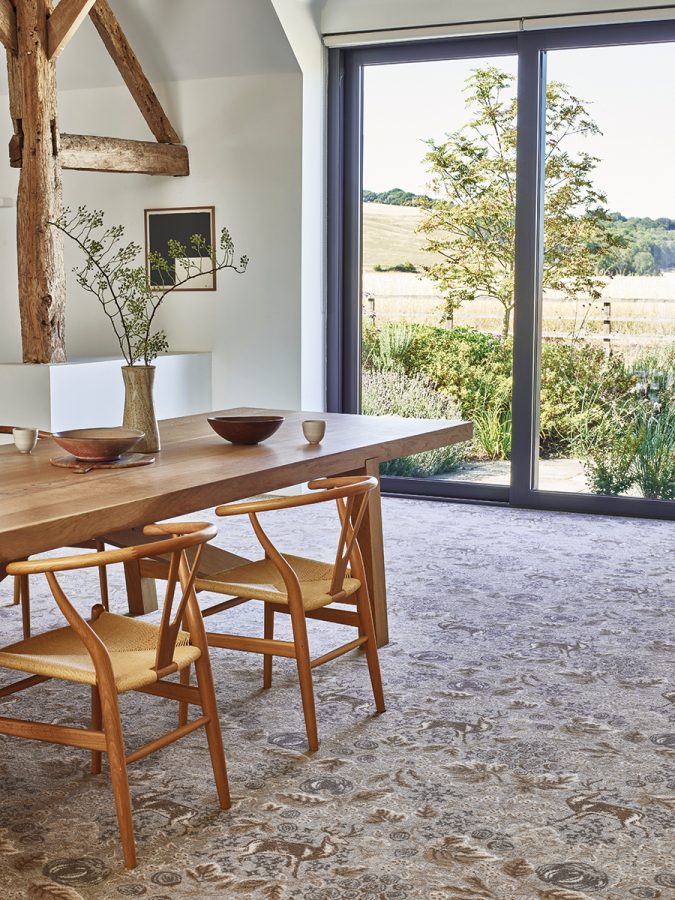
Beyond that, the company continues to develop and introduce new ranges. For example, building on two existing rug ranges, Brintons is currently working on a wall-to-wall carpet in collaboration with the Victoria and Albert Museum. For this, Jodie’s team is taking assets from the V&A’s archives and then designing them into carpets alongside the museum’s team. “The range really reflects the heritage of both brands. It’s not going to launch until next year, but we should have some sneak peeks ready towards the end of 2026, hopefully.” Exciting times ahead!
www.brintons.co.uk